Week 2 at the Capitol: Accountability, Transparency, and Serving with Purpose
Week two of the legislative session in Topeka brought meaningful conversations, tough questions, and important reminders about why public service matters.
On Friday, I carried a picture into my office that says a great deal about who I am and why I serve. It bears the American flag, an eagle, and the words of President Ronald Reagan: “If we ever forget we are one nation under God, then we will be one nation gone under.”
That message reflects a core belief that guides my work every day: we all answer to someone. Ultimately, we answer to the Creator of this world. That belief grounds my decisions and drives my commitment to do what is right for the people of District 1 and for Kansas.
Government Exists to Serve the People
Government exists to serve the people — not the other way around. This week, much of our work focused on improving transparency and accountability within government programs to ensure taxpayer dollars are being used responsibly and as intended.
During meetings with the Welfare Reform Committee, we reviewed the findings of a recent audit related to Kansas’s free-lunch program. The audit revealed that a significant number of students who did not qualify for the program were receiving benefits. As a result, the USDA overpaid Kansas schools an estimated $10 million to $14 million for meals that should not have been subsidized.
Because at-risk funding is tied to free-lunch enrollment, auditors also indicated that an additional $38 million to $53 million may have been distributed to schools beyond what was warranted.
It is important to be clear: this does not mean schools misused funds. The audit highlighted flaws in the system — not wrongdoing by school districts. It underscores the need for stronger checks and balances and raises important questions about whether the free-lunch model is the best way to determine at-risk funding moving forward.
For those interested in a deeper look at the audit and its implications, a detailed article is available from High Plains Public Radio here:
👉 https://www.hppr.org/hppr-news/2026-01-23/kansas-house-studies-free-lunch-enrollment-audit-implications-of-at-risk-overpayment-to-schools
SNAP Program Oversight and Accountability
This week, the committee also questioned the Department for Children and Families (DCF) about practices and procedures within the SNAP program.
Kansas currently exceeds the federal 6% error rate threshold for SNAP benefits. If the state cannot reduce that error rate, Kansas taxpayers could be required to cover a portion of federal benefits — potentially around $40 million at current levels.
DCF testified that fraud in the SNAP program is 1% or less. To clarify, fraud involves malicious intent to take advantage of the system, while errors include overpayments or underpayments due to administrative or eligibility issues.
Currently, DCF has 14 investigators assigned to fraud detection within a program administered by DCF itself. From my perspective, one of two things must be true:
We do not need 14 staff members to investigate 1% or less fraud, or
The system lacks proper independence and oversight.
As a result, a bill was introduced to move SNAP auditing authority under the Inspector General, who has demonstrated strong results uncovering fraud within the Medicaid program. This change would bring greater independence, transparency, and accountability to the process.
Convention of States Resolution
This week, the House passed SCR 1604, calling for a Convention of States. Kansas became the 20th state to apply to Congress for a convention to propose constitutional amendments, including term limits for members of Congress and a balanced federal budget.
While I support those goals, I voted against the resolution. We have never held a Convention of States, and the process is not clearly defined. Despite proposed safeguards, I remain concerned that such a convention could expand beyond its original intent. Fourteen additional states would still need to apply before a convention is called, but with growing political momentum nationwide, this is an issue that deserves careful consideration.
Election Reform and Other Legislative Topics
The Elections Committee heard testimony on HB 2452, which would move local elections to even-numbered years only. In Cherokee County, voter turnout for 2025 elections was approximately 12%, compared to roughly 70% during even-year general elections.
There are both advantages and concerns with this proposal. While it could increase participation and reduce election costs, it would also create longer ballots, additional workload for county clerks, and concerns about voter fatigue. This bill remains under discussion.
Additionally, both the House and Senate are considering legislation that would ban student cellphone use during the school day, from arrival until dismissal. This proposal is still early in the legislative process, and we will continue to monitor its progress.
Connecting with District 1
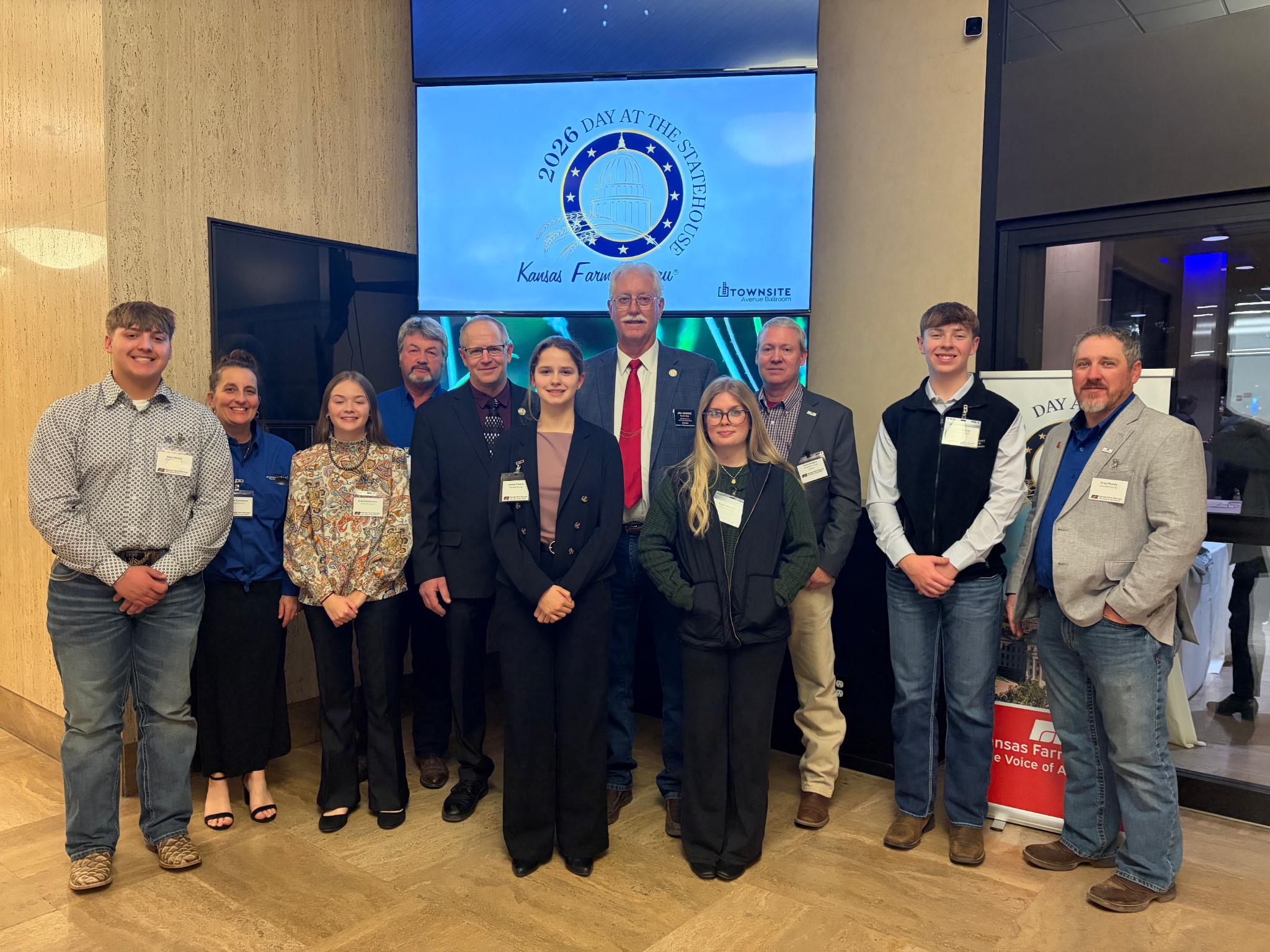
One of the highlights of the week was visiting with members of the Cherokee County Farm Bureau and students from Columbus and Riverton. It was a great opportunity to talk about issues impacting our communities and to discuss the legislative process with students while learning about their goals and ambitions.

I am honored to serve the residents of District 1. Please do not hesitate to reach out with concerns, questions, or feedback. Thank you for trusting me with this opportunity to serve.

