Week 6 Legislative Update: Turnaround Week at the Capitol
Last week marked the turnaround deadline at the Capitol — the point by which House bills must advance to the Senate in order to remain active this session. Nearly 100 bills moved forward, reflecting a busy and productive stretch of work.
Among the many votes taken, one of the most significant was my vote to override Governor Kelly’s veto of SB 244.
SB 244
I supported the override because I believe our laws should reflect enduring truths about human nature while protecting the dignity and privacy of every person. Certain realities are not created by government — they are inherent. One of those realities is the biological distinction between male and female. Government does not have the authority to redefine that distinction; rather, it has the responsibility to recognize it and govern accordingly.
SB 244 affirms that official state documents, such as driver’s licenses, reflect a person’s biological sex as recorded at birth. It also ensures that access to certain public spaces aligns with that biological reality. I believe this approach protects privacy, provides legal clarity, and reinforces policies grounded in common sense and longstanding understanding.
SB 281: Addressing Cellphone Use in Schools
The House amended SB 281, which would prohibit cellphone use from bell to bell in public and accredited private schools.
Teachers and administrators across Kansas consistently report that cellphone use in classrooms contributes to lower academic performance, ongoing distractions, disciplinary challenges, and increased anxiety and social pressure among students. Creating focused learning environments is essential if we want our students to succeed.
Public schools are funded by taxpayers and directly governed by the state, placing them clearly within legislative authority. Private schools, however, operate through voluntary association. Families choose them based on shared missions, values, and governance structures.
While I understand and appreciate the goal of reducing classroom distractions, we must carefully consider the limits of government authority. Extending state control into institutions it does not directly operate shifts the balance between government and civil society. Once that balance shifts, it can be difficult to restore.
Because the House amendments materially changed the bill, the Senate ruled it altered and returned SB 281 to the Education Committee for further review.
Sub HB 2731: Strengthening Oversight and Transparency
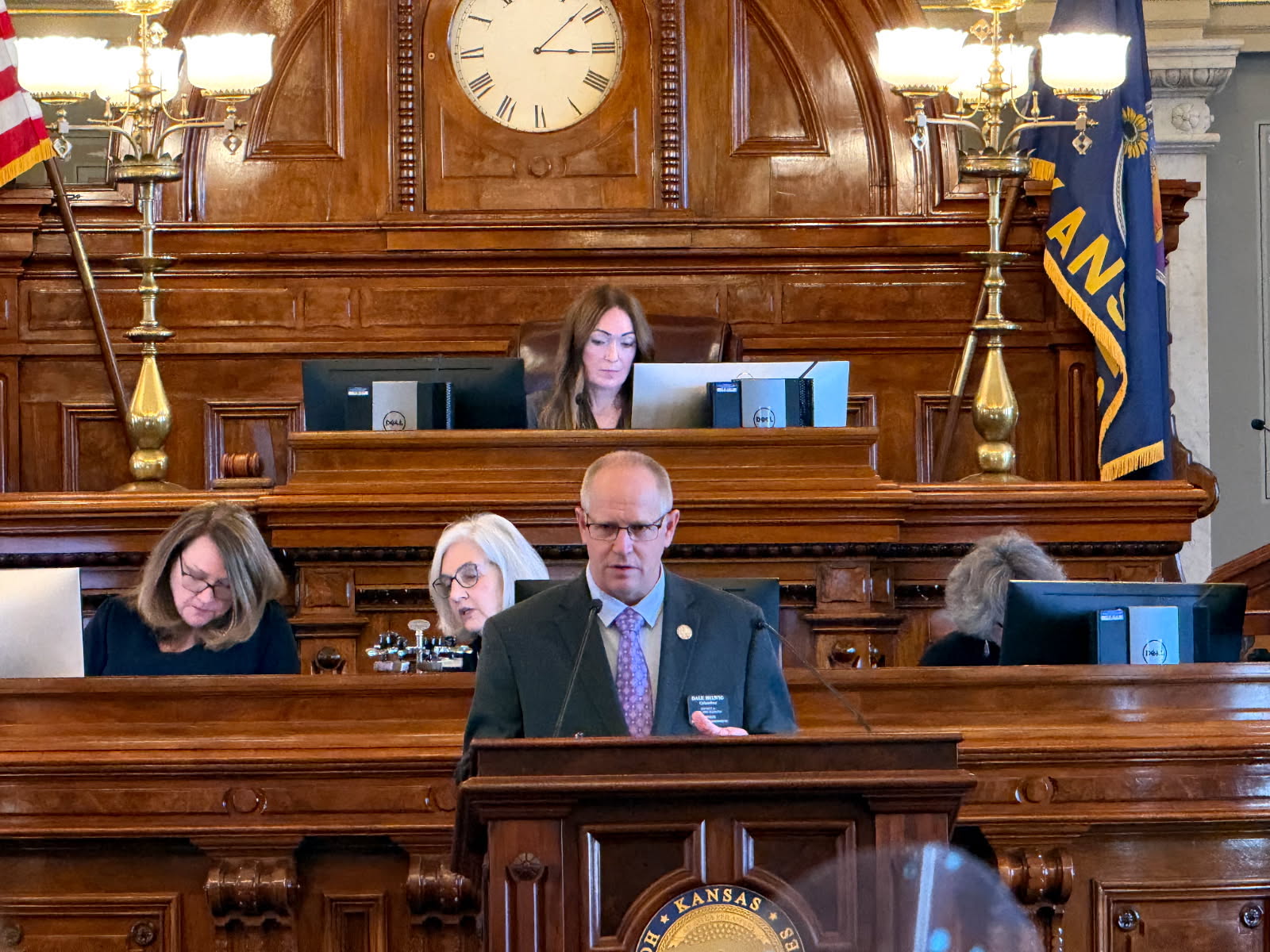
I was honored to carry Sub HB 2731 on the House floor this week.
This legislation improves coordination between the Department of Children and Families (DCF) and the Office of the Inspector General (OIG) in investigations involving fraud within cash assistance, childcare assistance, and food assistance programs. Specifically, it requires timely sharing of relevant information and documentation between agencies.
The bill does not reduce benefits, limit access, or change eligibility standards. It simply strengthens oversight processes that already exist. When agencies communicate efficiently, investigations are more effective, fraud is addressed more quickly, and public resources are better protected.
For families who legitimately rely on assistance programs, this provides greater assurance that funds will remain available and protected from misuse. For taxpayers, it reinforces responsible stewardship and transparency in how public dollars are administered.
Accountability and compassion are not opposing principles — they work best together.
HB 2451: Ensuring Fairness in Public Advocacy
HB 2451 reinforces an important principle: taxpayer dollars should not be used for political advocacy.
The bill prohibits government officers and employees from using public resources to promote or oppose proposed constitutional amendments or ballot questions. This includes spending on mailers, advertisements, or promotional campaigns.
The legislation does not prevent public officials from holding informational meetings or discussing factual details of proposals. Open dialogue remains essential. However, when government entities use taxpayer funds to advocate for a position, citizens are effectively required to fund speech they may not support.
HB 2451 promotes fairness, protects public trust, and ensures that public funds are used for public services — not political persuasion.
HB 2502: Supporting Our Outdoor Heritage
Hunting and fishing are more than recreational activities in Kansas. They are part of our heritage, our rural economy, and our longstanding conservation model. These traditions teach responsibility, patience, ethical decision-making, and respect for God’s creation.
HB 2502 strengthens participation in these traditions among both seniors and youth.
The bill restores a discounted lifetime combination hunting and fishing license for Kansas residents age 65 and older. It also expands the Kansas Kids Lifetime Combination License program by increasing eligibility from age seven to fifteen, lowering fees for older children within that range, and removing the program’s expiration date.
Encouraging youth participation builds long-term engagement in conservation. Lifetime license holders are more likely to remain active in wildlife management and outdoor stewardship. Restoring discounted access for seniors honors their longstanding contributions to Kansas’s outdoor culture.
Investing in our outdoor heritage is also an investment in conservation funding, as license fees directly support wildlife management and habitat preservation.
Visiting with Labette County Students
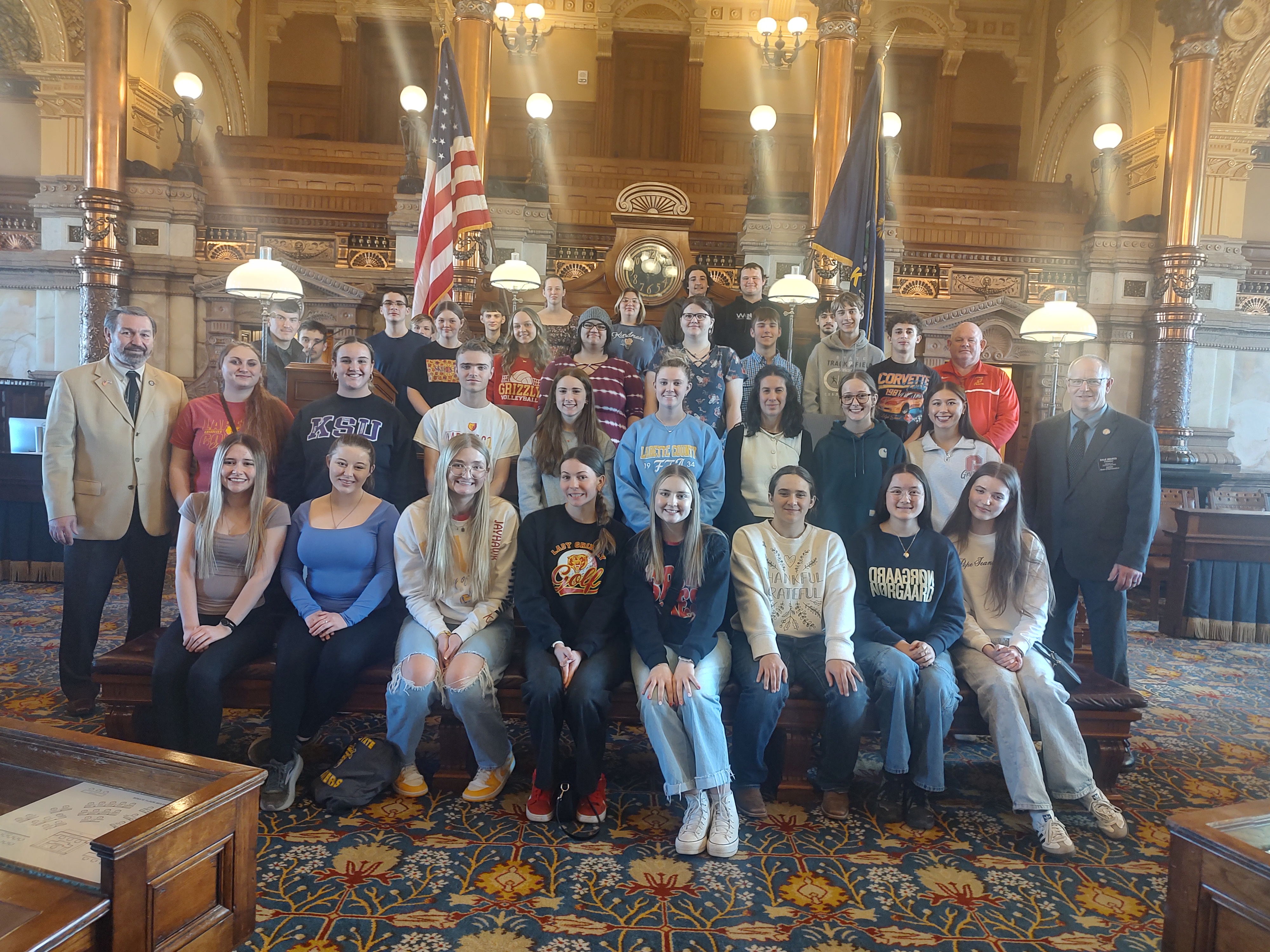
I was grateful for the opportunity to spend time with seniors from Labette County High School during their visit to the Capitol.
These students asked thoughtful questions about state government, public policy, and civic responsibility. They are focused on finishing high school strong and preparing for their next steps — whether college, the workforce, military service, or other opportunities.
I was encouraged by their drive, curiosity, and sense of purpose. The future of our state depends on engaged and principled young leaders, and I left that visit optimistic about what lies ahead for Kansas.
May God bless them as they begin this next chapter.
Thank you for allowing me to serve you in Topeka. It is an honor to represent our district. If you have questions, concerns, or input on legislation, I encourage you to reach out.
In service,
Dale Helwig

