Week 9 Update: CTE Programs, Pharmacy Reform, and School Cellphone Policy
Visitors at the Capitol, Career Education Success, and Key Bills Moving Forward
This week at the Capitol included several meaningful visits from constituents, important discussions on legislation, and the opportunity to see firsthand the impact of career education programs in our communities.
Visitors at the Capitol
I had the opportunity this week to welcome several visitors to the Capitol.
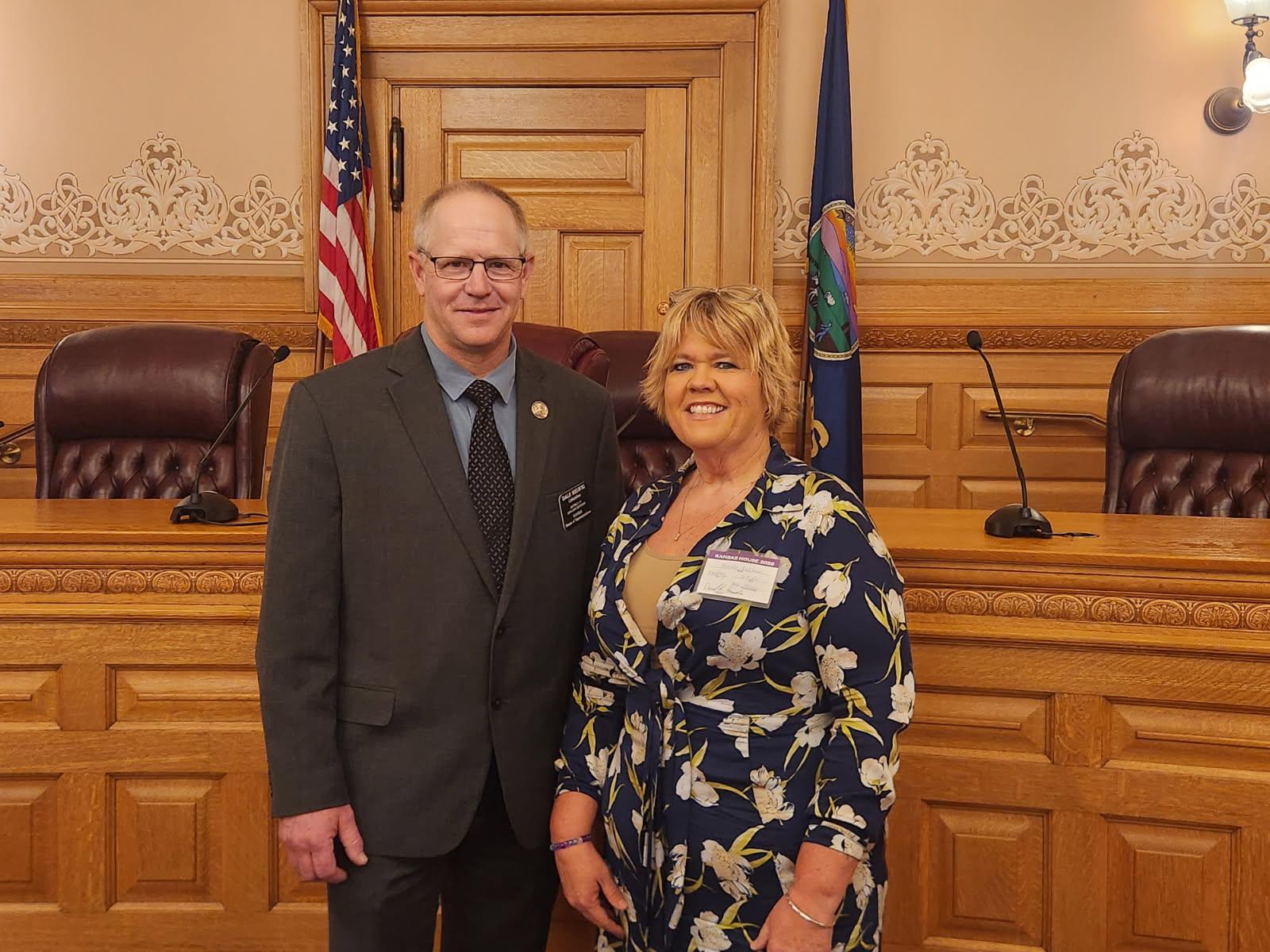
Michele Rickman from Baxter Springs came to visit and discuss issues currently facing Kansans. I appreciated the opportunity to spend time with her, talk about these important topics, and give her a brief tour of the Capitol while she was here.
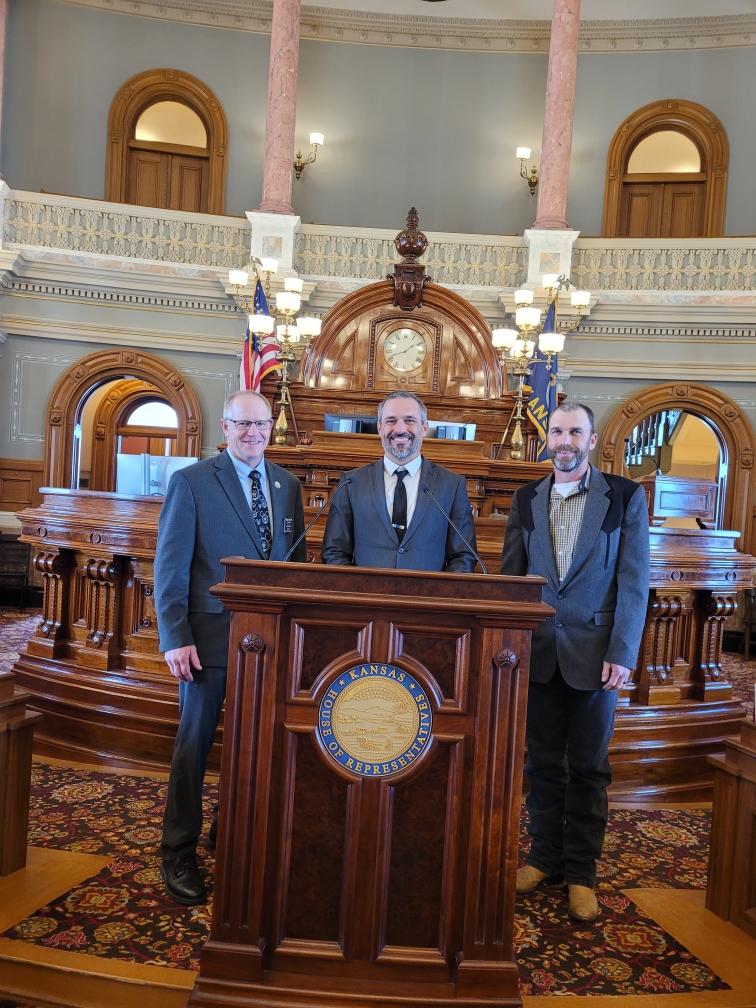
Andy Peterman and Todd Lacen also stopped by for a short visit during the week. It was great to spend some time with them and catch up. Andy had the honor of delivering the opening prayer for the House session on Wednesday, which was a meaningful moment and greatly appreciated.
Visits like these are always encouraging because they provide a valuable opportunity to hear directly from people in our communities about the issues that matter most.
Career & Technical Education: Building Homes and Building Futures
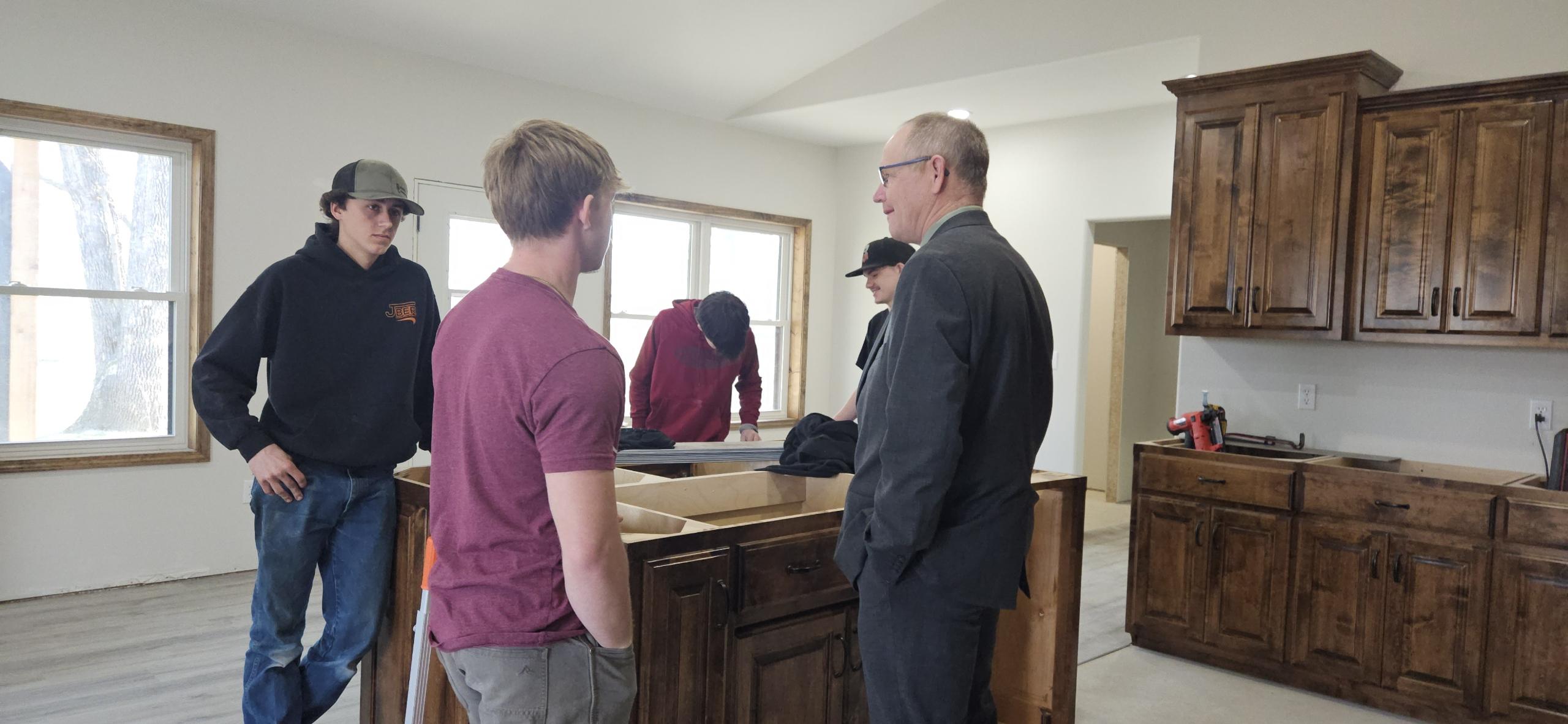
On Friday, I had the privilege of touring a home that students from USD 506 are currently building in Bartlett, Kansas. These students are part of an outstanding Career and Technical Education (CTE) program that allows them to earn both high school and college credit through Coffeyville Community College.
Secretary Tolland was also able to attend the event and see firsthand the impressive work these students are doing.
This program is a tremendous opportunity for both the students and the community because it accomplishes two very important goals.
First, students who complete the program leave with valuable, real-world skills that make them work-ready immediately after graduation. In many cases, students are able to finish high school not only with their diploma but also with a two-year degree from Coffeyville Community College, giving them a strong head start in their careers.
Second, the program benefits the community by helping address the ongoing housing shortage. As the students complete these projects, the community gains quality homes that are greatly needed.
The students of USD 506 are doing more than just building this home in Bartlett. They are also working on several additional projects in and around Altamont, gaining hands-on experience while making a meaningful contribution to their local communities.
Their hard work, dedication, and craftsmanship are impressive, and it is encouraging to see programs like this investing in the future of our workforce and our communities.
Senate Bill 360 (PBM Reform)
There has been a great deal of discussion surrounding Senate Bill 360. Some have referred to this bill as the “Pill Tax,” and I have received multiple emails about it. I would like to take a moment to address what this bill actually does.
Advertisements labeling SB 360 as a “pill tax” are misleading and are largely driven by Pharmacy Benefit Managers (PBMs)—large pharmaceutical middlemen that control roughly 80 percent of the prescription drug market and generate billions in revenue.
Similar PBM reforms have already been enacted in 34 states in an effort to curb rising prescription drug costs, and Kansas is pursuing the same approach.
Over time, PBMs have become a billion-dollar industry while consumers continue to pay more at the pharmacy counter. These insurance companies and their subsidiaries often operate under various names, adding costs and fees while directing patients and payments to pharmacies they own or control.
In many cases, PBMs reimburse independent pharmacies less than what it costs those pharmacies to purchase the medication. This practice is unsustainable and has contributed to the closure of independent pharmacies in rural Kansas communities.
PBMs have significant financial resources that allow them to operate behind the scenes while adding costs to prescription medications for consumers.
For these reasons, I will support SB 360 if it comes to the House floor.
Cellphone Policy in Schools (HB 2299)
Substitute for House Bill 2299 has passed the Legislature and is now on the Governor’s desk.
This bill requires public and accredited nonpublic schools to limit student use of personal electronic communication devices during the school day, with reasonable exceptions when needed. It also prohibits school employees from communicating with students through social media platforms for official school business.
In classrooms across Kansas, cellphones increasingly compete with learning. When students are constantly connected to their phones, it can distract from instruction, disrupt discipline, and reduce meaningful interaction with teachers and classmates.
Research and everyday classroom experience show that excessive phone use can affect attention, mental health, and social development.
This bill helps schools refocus the school day on what matters most—learning, encouragement, and personal growth. By setting clear expectations and boundaries, we can support teachers, reduce distractions, and create a better environment for students to succeed.
Senate Bill 363 (Welfare Reform)
This week the Welfare Reform Committee heard Kansas Senate Bill 363.
The bill addresses two primary issues.
First, it would require the Kansas Department of Health and Environment (KDHE), in coordination with the Kansas Department for Aging and Disability Services (KDADS), to seek federal approval to establish continuous Medicaid eligibility for certain individuals with intellectual or developmental disabilities who receive services through a home- or community-based services waiver.
Second, the bill would require more frequent data checks for individuals receiving state or federal benefits and would eliminate most self-attestation in the eligibility process.
The second provision is the most controversial aspect of the bill. Some believe it would place an undue burden on individuals receiving benefits. In addition, the agencies responsible for administering these programs have expressed concern that the requirements could be cumbersome and costly to implement.
The bill will be worked this week, and I expect that some changes may be made before it reaches the House floor.
However, there are several reasons why this legislation is being considered.
One key component of the bill is the elimination of most self-attestation reporting. For example, in the school lunch program, more than 50 percent of self-attestation forms were found to be inaccurate, resulting in more than $10 million in overpayments in the free and reduced lunch program alone. When combined with at-risk education funding, those payments exceeded $38 million.
Additionally, this bill aligns Kansas policy more closely with federal efforts such as H.R. 1 – the One Big Beautiful Bill Act.
The error rate in the Supplemental Nutrition Assistance Program (SNAP) in Kansas is currently over 6 percent, which could subject the state to potential fines or penalties. The vast majority of these errors are due to overpayments to beneficiaries.
Because these programs are funded by taxpayers, we should expect strong accountability from the agencies administering them and careful stewardship of public dollars.

